How Does Wardogs Play Differently After the Season 2 Rain Update?
Want articles like this for your own video to promote it on YouTube and Google? Order them through the Telegram bot @sat_sit_bot. It writes articles around your video, embeds the video and publishes them on popular niche websites (no ads). Free trial — 50 articles.
· based on the channel shroud
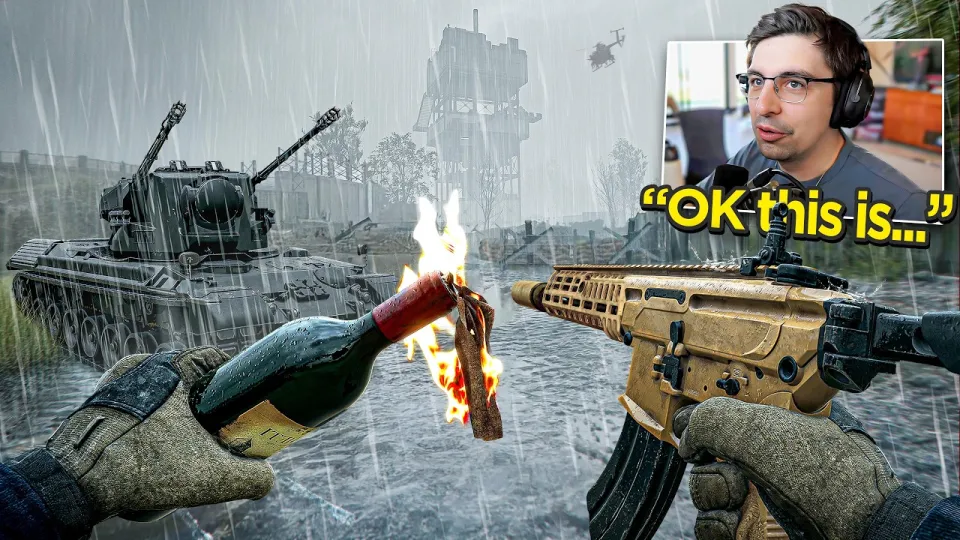
Wardogs plays differently after Season 2 because heavy rain now changes visibility, recoil fights and rotation timing across the map. The new weather cuts sight lines, weakens long-range sniping and pushes squads into closer, messier engagements where coordination and ammo choice matter more than raw aim. You can hear the full discussion and more community content via the shroud podcast on Spotify.
What the rain actually changes in Wardogs Season 2
The rain is not a cosmetic overlay; it is a systemic modifier that touches several layers of play at once.
- Visibility drops sharply. Long sight lines that used to reward a scoped rifle now dissolve into grey haze. Players report that even around 190 meters it can be hard to identify a target, let alone land a clean headshot.
- Sniping loses its edge. Positions that were premium overwatch spots in dry weather become far less valuable, because you cannot reliably track movement through the rain.
- Infrared optics get stronger. Thermal and infrared goggles cut through the reduced contrast, so players running them gain a real information advantage over anyone relying on plain optics.
- Audio cues shift. Rain masks footsteps and distant gunfire, which makes sound-based spotting less dependable and pushes teams toward tighter spacing.
- Fights move indoors and close. With open ground harder to cross safely, buildings, towers and bridges become the contested ground.
How to adapt your loadout and ammo choice to wet weather
The single biggest adjustment in rain is accepting that you will fight at shorter range, and building your kit around that.
- Prioritize HP or high-penetration ammunition. Against armored targets, torso and head shots absorb far more punishment than players expect. Leg shots with hollow-point or HP rounds remain one of the fastest ways to drop a heavily geared opponent.
- Swap the long scope for a mid-range optic. If you cannot see past roughly 190 meters, a 4x or red dot paired with a reliable rifle beats a sniper you cannot use.
- Carry infrared goggles when you can. They are the closest thing to a hard counter to the weather.
- Repack magazines before you move, not during a fight. Inventory management mid-rotation is one of the most common ways players die in the rain, because the noise and haze hide approaching enemies until they are on top of you.
- Bring throwables. Smoke is less useful when everything is already obscured, but frags and flashbangs into tight interiors do more work than ever.
A recurring pattern in high-level lobbies is a player calling out an enemy inside a building, walking in, opening the inventory to top off magazines, and getting killed by the same opponent. In rain, that mistake is punished harder because you cannot hear the flank coming.
Squad size and coordination in the new weather
Rain amplifies the advantage of numbers and voice communication. A group of roughly twenty players moving together in a single chat can systematically clear a district, while a six-player squad calling out in the same channel has to pick its fights carefully.
Key coordination points:
- Assign roles before contact. One player watches the rear, one holds the ladder or stairwell, the rest push. Rain makes it easy for a lone enemy to slip behind a disorganized group.
- Use landmarks, not distances. "South tower of Ozeti" and "the bridge to the north-west" are more useful callouts than compass bearings when nobody can see far.
- Consolidate loot runs. Splitting up to farm gear in low visibility is how squads lose members one at a time.
- Expect base-building pressure. Large groups tend to fortify strong positions, so approaching a well-built base in the rain requires patience and a plan for the interior.
Recoil control and gunfights when you cannot see far
With sight lines compressed, most engagements resolve inside 50 meters, and that changes what "good aim" means. Recoil control on automatic weapons becomes the deciding skill, because fights are close, fast and often decided by who keeps the muzzle down through a full magazine.
Practical habits that help:
- Burst in three to five rounds rather than holding the trigger; the rain hides your muzzle flash less than you think.
- Aim low against armored targets and walk the recoil up rather than starting at the head.
- Pre-fire corners you have already called out; in low visibility the first burst often wins.
- Reset between fights. Repacking and healing in cover beats doing it while exposed.
- Do not blame the weapon before checking your ammo type. A gun loaded with the wrong rounds will feel terrible regardless of how well you control it.
Common player questions about the Wardogs rain update
Beyond loadouts, the most frequent debates in the community are about fairness and map identity.
- Does rain gut sniping entirely? It weakens it heavily rather than removing it. Snipers still work at medium range and against stationary targets, but the classic long-lane overwatch role is much less reliable.
- Is the weather random or scheduled? Rain arrives as a dynamic condition during a match, so squads must adapt mid-raid rather than plan around a fixed forecast.
- Does it make the game harder for everyone? Yes, and that is largely the point: it opens room for different playstyles, rewards players who prepare for close quarters, and punishes those who rely on one comfort loadout.
- Why do some fights feel unwinnable? Often it is group size and comms discipline, not the rain. Twenty coordinated players versus six is a structural disadvantage that weather only magnifies.
Where to find the full Wardogs discussion and community content
All official links from the breakdown:
- shroud podcast on Spotify
- Logitech G products
- Maingear shroud PC build
- shroud on Twitter
- shroud on Twitch
The bottom line on Wardogs Season 2
The rain update genuinely turns Wardogs into a different game: sight lines collapse, snipers lose their throne, and infrared optics and close-range recoil control become the meta. Squads that communicate, carry the right ammunition and resist the urge to fiddle with inventory mid-fight will thrive, while lone wolves and long-range campers will struggle. If you want more of this kind of hands-on breakdown, the video from the channel shroud walks through the new weather in live matches, and the shroud Spotify show is where the wider conversation continues.
Key takeaways
- Wardogs Season 2 introduces a dynamic heavy rain weather system that reduces visibility across the map.
- Rain makes long-range sniping much harder, with targets often unreadable beyond roughly 190 meters.
- Infrared goggles become significantly stronger in rain because they cut through the reduced visibility.
- Enemy squads of around 20 players coordinating in one voice chat can overwhelm smaller groups of about 6.
- HP ammunition and leg shots matter more than ever against armored opponents in wet, close-range fights.
Source: Wardogs Is a Completely Different Game Now... · Markdown version
Questions & answers
Does the rain in Wardogs Season 2 make sniping useless?
Not useless, but heavily nerfed. Visibility drops enough that identifying and tracking targets beyond roughly 190 meters becomes unreliable, so classic long-lane overwatch spots lose most of their value. Snipers still work at medium range and against stationary or illuminated targets, especially when paired with infrared optics.
Why do my bullets feel weak against armored enemies in the rain?
It is usually an ammo problem rather than a weapon problem. Against heavy armor, torso and head shots absorb a lot of damage, so HP or high-penetration rounds aimed at the legs drop targets much faster. Players who keep firing center mass with standard ammo often conclude the gun is bad when the loadout is the real issue.
How do I deal with large coordinated squads in low visibility?
Avoid open rotations and force fights in tight interiors where numbers matter less. Use landmarks for callouts, keep your squad together, watch the rear, and pre-fire corners you have already identified. A six-player group can beat a much larger one only by picking isolated fights and never getting caught in the open.
Are infrared goggles worth using in rainy matches?
Yes, they are one of the strongest picks in the current weather. Rain reduces contrast and makes ordinary optics struggle, while infrared cuts through much of that loss and gives you a real information advantage. If you have the slot and the budget, bring them.